Which Fire Retardant Is Most Effective: The 2026 Expert Guide
Wildfires are becoming more frequent and more destructive each year, especially for homeowners in Los Angeles. If you live in a fire-prone area, protecting your home is now more critical than ever.
Many people turn to fire retardants as the first line of defense against wildfire devastation. But not all products work the same way. Do you know which fire retardant is most effective for your property and local conditions?
In this expert guide, we will break down the science behind fire retardants, compare leading solutions for 2026, and show you what truly sets the safest and longest-lasting options apart. You will learn how fire retardants work, what types are available, and which factors matter most for real-world protection.
By the end, you will have the knowledge needed to choose the right defense for your home, your family, and your future.
Understanding Fire Retardants: What They Are and How They Work
Wildfires are an ever-present concern for Los Angeles homeowners, and understanding which fire retardant is most effective can make all the difference. As wildfire defense experts, we believe knowledge is your first layer of protection. Let us break down the essentials of fire retardants so you can make informed choices for your property.
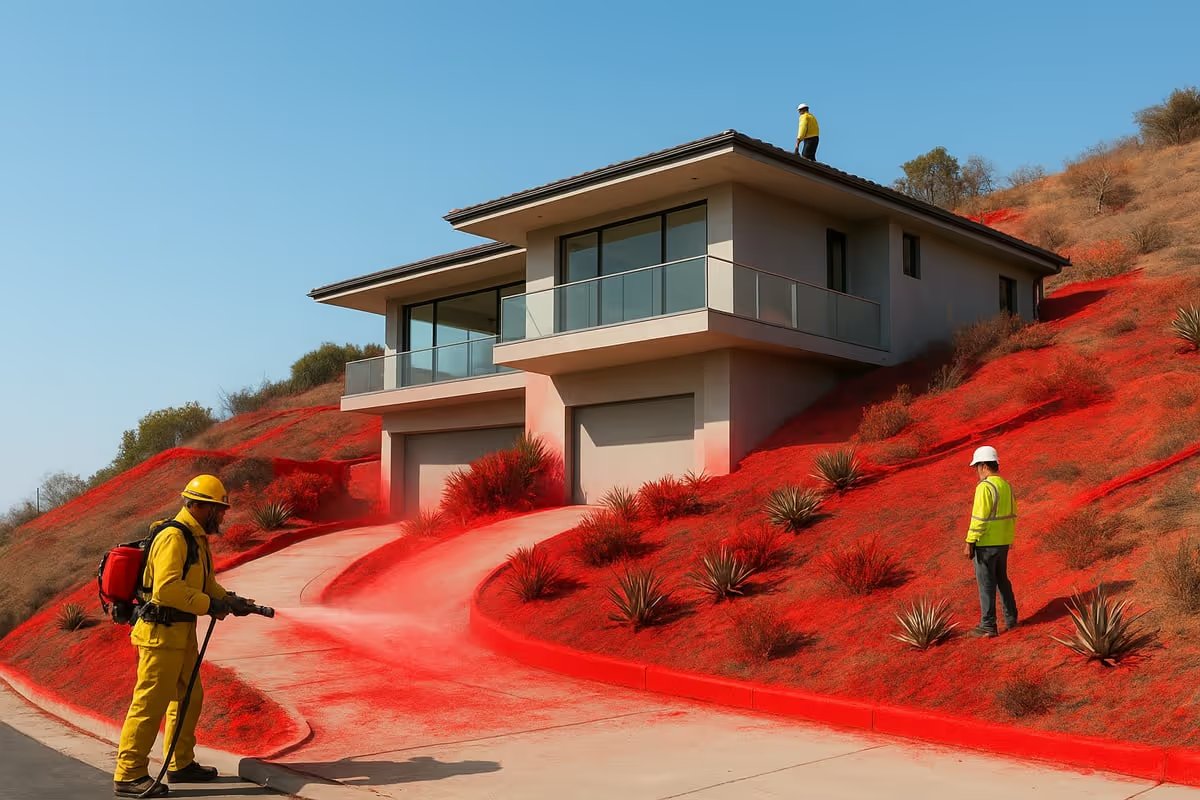
What Is a Fire Retardant?
A fire retardant is a chemical or physical treatment that reduces the flammability of materials and vegetation. By creating a protective barrier, it helps slow down or prevent the ignition and spread of fire.
What makes a product stand out when asking which fire retardant is most effective? The answer lies in its unique chemical properties. These include heat resistance, the ability to inhibit combustion, and the power to form a shield on treated surfaces.
How Fire Retardants Protect Against Wildfires
Fire retardants work by interrupting the fire’s fuel, heat, and oxygen cycle. When applied, they form a layer that either cools materials or blocks the chemical reactions needed for flames to spread.
Knowing which fire retardant is most effective depends on how well it stops ignition and slows fire movement. Unlike suppression, which puts out active flames, prevention with retardants creates a defensive line before the fire even arrives.
Types of Fire Retardants: Aerial vs. Ground Application
There are two main types of fire retardants used in wildfire defense: aerial and ground-applied. Aerial retardants, such as Phos-Chek, are dropped from planes or helicopters to create barriers on large swaths of land.
Ground-applied products, including sprays and foams, are used directly on homes and landscaping. When considering which fire retardant is most effective, ground applications often provide longer-lasting, targeted protection for residential properties.
Why Homeowners Should Care About Effectiveness
Los Angeles homes face unique wildfire risks due to dry conditions and proximity to wildland areas. Every year, inadequate protection leads to preventable property loss.
Choosing which fire retardant is most effective is critical. Real-world incidents show that homes with proper, timely treatment survive fires that devastate unprotected neighborhoods. Our team has witnessed firsthand how advanced solutions can be the difference between safety and loss.
Key Effectiveness Metrics
When evaluating which fire retardant is most effective, focus on these metrics:
- Coverage: How thoroughly does it coat surfaces?
- Longevity: How long does protection last after application?
- Reactivation: Can it be reactivated by moisture or needs reapplication?
- Toxicity: Is it safe for people, pets, and plants?
- Environmental Impact: Does it harm local ecosystems?
For a deeper dive into these factors and to access expert guides, visit our Wildfire safety resources for homeowners. The right knowledge will help you choose the safest, most effective protection for your home.
Factors That Determine Fire Retardant Effectiveness
Selecting which fire retardant is most effective is not as simple as picking a name you recognize or the product with the most chemicals. The real answer lies in understanding several key performance factors, each critical to safeguarding your Los Angeles home from wildfire threats. Let’s break down these factors so you can make an informed, confident decision.
Coverage and Penetration
One of the most important questions homeowners ask is which fire retardant is most effective at thoroughly covering and penetrating surfaces. Effective fire retardants must coat all vulnerable materials, including wood, fencing, decks, and vegetation. Deep penetration ensures embers cannot find hidden fuel, even when wind conditions change rapidly.
For full perimeter defense, ground-applied retardants often outperform aerial drops. At Matador Fire, we use specialized equipment to reach every nook and cranny, providing a continuous protective barrier. Remember, gaps in coverage can leave your property exposed.
Longevity and Weather Resistance
How long a fire retardant lasts after application is a major determinant of overall effectiveness. Some products only protect for days, while others remain active for months, even through rain or intense sun. Longevity is especially important in Los Angeles, where wildfire season can stretch across multiple months.
Modern, biodegradable formulas now offer extended weather resistance, maintaining their protective properties without frequent reapplication. Choosing a solution with proven durability can mean the difference between peace of mind and a false sense of security.
Safety and Environmental Impact
Safety is a non-negotiable factor when deciding which fire retardant is most effective for families, pets, and landscaping. Many traditional formulations contain chemicals that can be harmful or leave behind residue. Newer, eco-safe options are engineered to be non-toxic and biodegradable, protecting not just your home but also your garden and local wildlife.
At Matador Fire, we prioritize solutions that preserve soil health and plant life while delivering robust fire protection. This approach allows for long-term safety without compromising the environment you cherish.
Reactivation and Maintenance
A truly effective fire retardant can be reactivated by moisture or reapplied as needed without losing potency. This means less worry for homeowners—routine maintenance can be scheduled around weather events or fire alerts.
Some advanced products bond with surfaces and reactivate after light rainfall, extending their life between professional treatments. Our team provides maintenance reminders and support so your defense never lapses.
Regulatory Approvals and Testing
Regulatory approval is essential in determining which fire retardant is most effective and reliable. Products certified by agencies like Cal Fire, USDA, or the US Forest Service have undergone rigorous laboratory and field tests. In 2025, new regulations emphasize both performance and environmental responsibility.
Recent research, such as the Comprehensive Evaluation of High-Resistance Fire Retardant, highlights how advanced formulations are tested for thermal stability and long-term protection. Always look for these certifications when selecting a product for your home.
Cost-Effectiveness
Finally, consider cost-effectiveness when evaluating which fire retardant is most effective for your property. The upfront price should be weighed against the area covered, duration of protection, and potential reduction in property risk. Sometimes, a slightly higher investment in a high-quality, long-lasting product can save thousands in future repairs or losses.
Our team at Matador Fire is happy to provide a free, no-obligation consultation to help you balance protection, safety, and budget. Reach out today and let us help you create a tailored wildfire defense plan that truly works for your home.

Comparing the Leading Fire Retardant Solutions in 2025
When evaluating which fire retardant is most effective for your property, it’s essential to look beyond marketing claims and focus on real-world performance. As wildfire threats intensify across Los Angeles, homeowners need solutions that deliver reliable, long-lasting protection. Let’s break down the main options available in 2025 and see how they measure up.
Aerial Drop Retardants (e.g., Phos-Chek)
Aerial drop retardants like Phos-Chek remain a familiar sight during wildfire season. Firefighting agencies use planes and helicopters to deliver these phosphate-based solutions, creating firebreaks and slowing advancing flames. They’re designed for rapid, large-scale deployment, often protecting entire neighborhoods in emergency scenarios.
However, when it comes to which fire retardant is most effective for homeowners, aerial drops have limitations. Coverage can be inconsistent, especially on sloped terrain or dense foliage. These products often degrade after rain or intense sun, reducing longevity. Additionally, environmental concerns about chemical runoff have increased in recent years.
For homeowners seeking targeted, lasting protection, aerial retardants are usually a supplementary defense rather than a primary solution.
Ground-Applied Retardants (Professional-Grade Sprays and Foams)
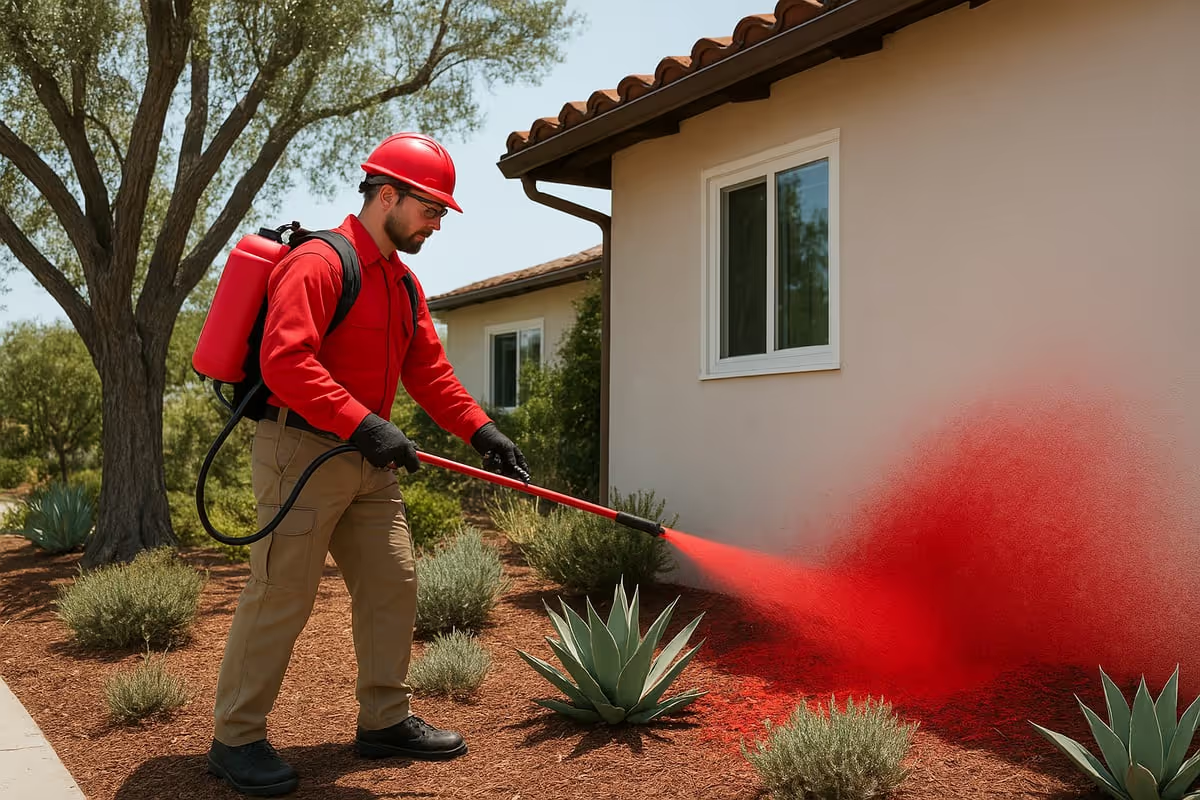
Ground-applied fire retardants are engineered specifically for home defense. Modern formulations, applied directly to structures and landscaping, form a durable barrier that inhibits ignition and slows fire spread. Professional application ensures thorough coverage, even in hard-to-reach areas.
In our experience at Matador Fire, these solutions have proven highly effective for Los Angeles properties. Homes treated in 2023 and 2024 with ground-based sprays experienced significantly less fire damage than untreated neighbors. The key advantage is precise, long-lasting protection tailored to each property’s unique risk profile.
If you’re weighing which fire retardant is most effective for your home, professionally applied ground retardants consistently outperform DIY efforts or sporadic aerial drops. For an overview of advanced options, see our Advanced wildfire defense solutions.
Biodegradable and Eco-Safe Fire Retardants
Sustainability is now a top priority for many families. New plant-based and biodegradable retardants have emerged, offering robust fire resistance without harming people, pets, or landscaping. These eco-safe options are formulated to break down naturally after the wildfire season, minimizing environmental impact.
Lab and field testing in 2025 show these products rival traditional retardants in longevity and coverage. They’re especially popular among homeowners who want to balance safety with environmental stewardship. When evaluating which fire retardant is most effective, consider how eco-safe formulas protect both your home and the surrounding ecosystem.
Look for certifications from agencies like Cal Fire and the USDA, which validate both safety and performance. Eco-safe solutions are ideal for those wanting advanced defense with peace of mind about long-term impacts.
Retardant Gels and Foams for Emergency Use
Retardant gels and foams are designed for quick, last-minute application just before a wildfire threatens. These products cling to surfaces, creating a temporary shield against heat and embers. They’re often used by homeowners who need immediate protection or cannot access professional services in time.
While these solutions can be lifesavers in urgent situations, their effectiveness is short-lived. Gels and foams typically last only a few hours to days and may require frequent reapplication, especially in windy or rainy conditions. Coverage gaps are a concern, and improper use can leave vulnerable areas exposed.
If you’re considering which fire retardant is most effective for emergency use, gels and foams offer convenience but should not replace long-term, comprehensive strategies. They work best as a supplement to more durable applications.
DIY vs. Professional Application: What Works Best?
Many homeowners wonder whether DIY fire retardant kits can compete with professional wildfire defense services. While DIY fire retardant sprays are widely available, achieving consistent and thorough coverage is difficult without specialized equipment. Missed areas, uneven application, or incorrect dilution can significantly reduce effectiveness, especially in high-risk wildfire zones.
Professional application offers several critical advantages. Trained experts assess each property, identify vulnerable areas, and apply fire retardants using specialized tools designed for optimal coverage. Professional services also ensure compliance with local regulations and product certifications, which can help support insurance eligibility and long-term safety.
When it comes to reliability, coverage, and peace of mind, professional application consistently delivers better outcomes for homeowners seeking meaningful wildfire protection and reduced risk.
Fire retardant solutions differ in how long they last, how much area they protect, and where they are most effective.
1. Aerial drop retardants are used during active wildfires to slow fire spread across large areas. Their effectiveness typically lasts from a few days to a few weeks, coverage can vary, and environmental impact is generally moderate. They are best suited for large-scale firebreaks rather than individual home protection.
2. Ground-applied fire retardants provide longer-term protection around individual homes and properties. When professionally applied, they can remain effective for several months, offer high coverage, and have a low to moderate environmental impact, making them ideal for personalized wildfire defense.
3. Biodegradable or eco-safe fire retardants offer long-lasting protection with minimal environmental impact. These solutions typically last for months, provide high coverage, and are well suited for family homes and environmentally conscious properties.
4. Fire-resistant gels and foams are designed for short-term or emergency use. Their effectiveness lasts from a few hours to a few days, with moderate coverage, making them useful when a wildfire threat is imminent but not as a long-term solution.
5. DIY fire retardant kits can provide supplemental protection but are not a replacement for professional-grade applications. Coverage is often inconsistent, longevity is typically measured in weeks, and results vary by product, making them best used as an added precaution.
Choosing the right fire retardant approach depends on your property’s unique risks, priorities, and desired level of protection. For the highest level of safety and long-term resilience, contact Matador Fire for a free, no-obligation consultation and a customized wildfire defense assessment. Our experts are ready to help you build a wildfire protection plan that delivers real, reliable results.
Matador Fire: Advanced Wildfire Defense for Los Angeles Homeowners
Los Angeles homeowners regularly ask us which fire retardant is most effective for protecting their homes as wildfire seasons intensify. The answer depends on a blend of science, safety, and strategy. Fire retardants are specialized solutions that slow or prevent the ignition and spread of fire by creating a protective barrier on surfaces and vegetation. Their effectiveness is shaped by coverage, how long they last, their safety for people and plants, and their environmental impact.
Our Professional-Grade Fire Retardant Solutions
At Matador Fire, we prioritize answering which fire retardant is most effective for residential and community defense. Our certified, non toxic fire retardants are trusted by Cal Fire, USDA, and the US Forest Service. Unlike traditional aerial drops like Phos Chek, our ground based applications are designed for precision, ensuring every vulnerable area receives thorough, lasting protection.
Our formulas form a durable shield on structures and landscaping. This means your home is protected before wildfire season starts, not just during an emergency response. We believe the best solution is one that blends proven science with practical application.
Customized Application Services for Maximum Protection
Every Los Angeles property faces unique wildfire risks, from hillside exposures to dense vegetation. That is why we offer tailored application services, evaluating your home’s layout, landscaping, and vulnerabilities. Our experts use professional equipment to apply retardant with even coverage, focusing on eaves, fences, decks, and plantings.
For homeowners comparing which fire retardant is most effective, professional application stands out for its consistency and compliance. Learn more about our Professional fire retardant application process to see how targeted treatment can protect your investment.
Eco-Friendly and Family-Safe Approach
Many ask if choosing which fire retardant is most effective means compromising on health or the environment. With Matador Fire, the answer is no. Our formulas are biodegradable, plant safe, and pet safe. We avoid harsh chemicals found in older products, so your landscaping remains healthy and your family is not exposed to unnecessary risks.
This approach means you do not need to choose between safety and sustainability. The result is robust wildfire defense that aligns with modern environmental values.
Proven Results in LA’s Wildfire Zones
Our commitment to discovering which fire retardant is most effective is backed by real results. Homes in Malibu, Pacific Palisades, and Brentwood treated with our solutions have withstood major wildfire events with minimal or no damage. Homeowners frequently share their peace of mind, knowing their properties are defended by science based, professionally applied barriers.
Customer satisfaction data shows a high rate of repeat applications and referrals, a testament to the reliability of our methods.
Free Consultation and Community Resilience
Ready to take the next step in protecting your home? Contact Matador Fire for a free, no obligation assessment and custom wildfire defense plan. Our team will help you determine which fire retardant is most effective for your property and ensure you are prepared for the next wildfire season. Together, we can build resilience across Los Angeles neighborhoods, one home at a time.