Wildfire Emergency Readiness: Your Guide to Preparing for Evacuation
"Emergency readiness" often feels like just another item on the household to-do list—right next to cleaning the gutters. But when it comes to wildfires, treating it like a chore is a mistake. Most homeowners believe they are prepared because they have a flashlight and a first-aid kit. However, real readiness isn't about stuff; it’s about speed. We’re breaking down the tips that actually matter when you need to evacuate immediately

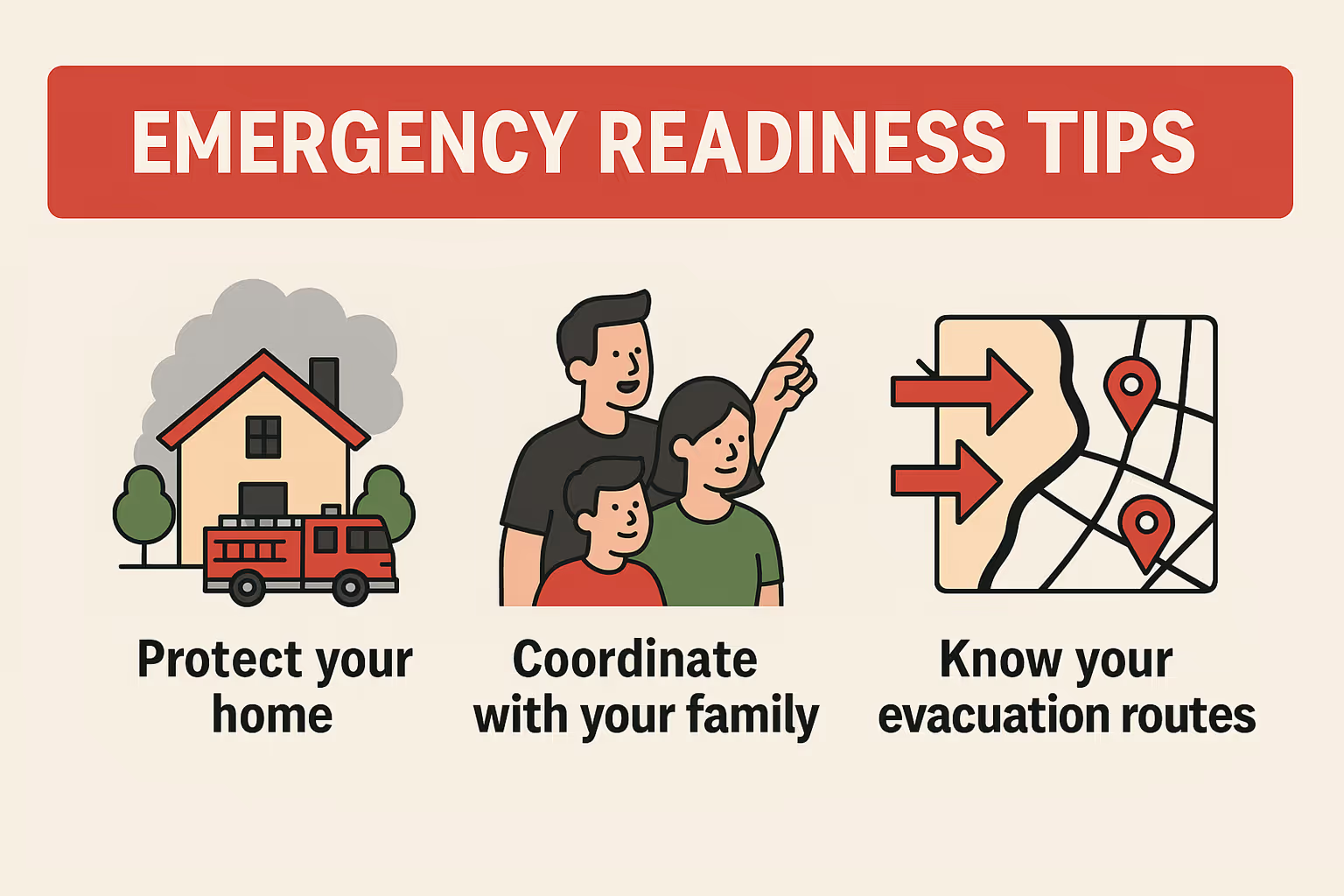
The Rules of Fire Season Have Changed
Evacuation orders used to be rare; now they are a seasonal expectation. Unfortunately, our preparation hasn't caught up to the threat. Families are often caught off guard not by the fire itself, but by the speed at which it travels.
Consider the current landscape:
- Longer Seasons: The average fire season is now 78 days longer than it was in the 1970's.
- Bigger Burns: Between 2017 and 2021, we lost an average of 8 million acres annually - representing double the amount we saw in the late 80's.
- Higher Stakes: Over 4.5 million homes are now designated as "high or extreme risk."
Yet, 60% of at-risk households still don't have a formal plan. The gap between the rising danger and our readiness is where the real emergency lies. When the alarm sounds, you shouldn't be thinking—you should be moving.
True Readiness is a System, Not a Suitcase
We tend to visualize wildfires as a massive wall of flames marching toward our front door. But in reality, the biggest threat isn't the fire front—it's the ember storm. During high winds, burning embers can travel up to a mile ahead of the actual fire, raining down on your roof and deck like hail. If your home has a weak point, an ember will find it.
Harden the Asset
Your primary goal is to deny those embers a fuel source. This means looking at your home through the eyes of the fire. That pile of dry leaves in the rain gutter? That is a fuse. The open vent in the attic? That is an entry point. By installing mesh screens (1/8 inch or smaller) over your vents and clearing the "zero zone" (the first 5 feet around your foundation) of all flammable vegetation, you are essentially sealing the envelope of your home.
Research from the IBHS proves this works: homes with a cleared "defensible space" and fire-resistant upgrades are up to six times more likely to survive than their neighbors, even if firefighters can't reach them in time.
The Family Logistics
The other half of the system is human. Chaos is the enemy of speed. When a Red Flag Warning is issued, you shouldn't be debating who is responsible for what.
Assign roles now:
- Role A: Grabs the pets and the carriers.
- Role B: Shuts off the gas and closes all windows.
- Role C: Loads the vehicle.
The "Last 60 Minutes" Protocol
When the alert hits your phone, the time for "planning" is over. You are now in execution mode. If you are lucky enough to have a one-hour lead time before mandatory evacuation, do not waste it pacing around the living room. Use this "Golden Hour" to aggressively protect your property.
Secure the Perimeter
Start outside. You want to remove anything that can bridge the fire to your house. Toss patio furniture, doormats, and propane tanks as far away from the structure as possible (or put them inside the garage). If you have a wooden fence attached to your house, prop the gate open to break the continuity of the fuel line.
Seal the Envelope
Go inside and shut everything. Windows, doors, pet doors, and vents need to be closed tight to stop embers from being sucked inside. Close your interior doors as well; if one room catches fire, a closed door can slow the spread and save the rest of the house.
Light It Up
It sounds counterintuitive, but turn on every light in the house—porch lights, hallway lights, and living room lamps. Smoke can turn day into night instantly. If firefighters are moving through your neighborhood in heavy smoke, a well-lit home is easier to see and easier to defend.
Position for the Exit
Finally, back your car into the driveway and load it. Do not park in the garage if you can avoid it; if the power goes out, your automatic garage door opener won't work, trapping your vehicle inside. Park facing the street, keys in the ignition, ready to roll the second you give the signal.
The Exit Strategy: What to Take and How to Move
There is a phenomenon called "cognitive tunneling" that happens when human beings are terrified. Your vision narrows, your hearing dampens, and your ability to make complex decisions vanishes. If you wait until the evacuation order to decide what to pack, you will likely grab the wrong things—or nothing at all.
You need to build your "Go-Bag" when you are calm, so you can grab it when you are frantic
The "No-Regrets" Checklist
Don't wait until the power is out to find these items. Pack them in durable bins or backpacks near your exit.
Survival Essentials:
- Water: 1 gallon per person, per day (3-day minimum).
- Food: Non-perishable, ready-to-eat (energy bars, canned goods) + manual opener.
- Comms: Battery-powered or hand-crank radio (NOAA Weather Radio is best).
- Light: Flashlight or Headlamp + extra batteries.
- Air Filtration: N95 masks (Standard cloth masks do not filter wildfire smoke particles).
- First Aid: Basic kit + supply of daily medications.
- Tools: Multi-tool (Leatherman/Swiss Army) & Whistle.
Personal & Critical Documents:
- The "Paperwork": Copies of deeds, IDs, insurance policies, and medical records. Tip: Store in a waterproof pouch or on an encrypted USB drive.
- Cash: Small bills ($1s, $5s, $10s) and coins. ATMs and credit card readers will likely fail during power outages.
- Clothing: 3 days of clothes. Stick to cotton or wool (avoid synthetics that melt). Include sturdy boots or shoes.
- Tech: Phone chargers + a fully charged portable power bank.
- Hygiene: Toothbrush, soap, wet wipes, hand sanitizer, and feminine products.
Family & Pets:
- Children: Diapers, formula, bottles, and one "comfort item" (toy/book) to reduce stress.
- Pets: Carriers (animals will hide when scared), leash, food/water bowls, and copies of vaccination records.
The "Pro" Add-Ons
- Navigation: Physical, printed map of your local area. Do not rely on GPS.
- Access: Extra set of car and house keys.
- Protection: Fire blanket (or welding blanket), heat-resistant gloves, and goggles.
- Defense: Small Class ABC fire extinguisher.
Navigating the Escape
Once you are in the car, the rules change. Speed and visibility become your primary concerns.
The "GPS Trap"
In a normal traffic jam, Waze or Google Maps is your best friend. In a wildfire, it can be a liability. Navigation algorithms often fail to register road closures, downed power lines, or fast-moving fire fronts in real-time. If you blindly follow a blue line on your screen, you risk turning onto a road that is already blocked by flames.
Know Your Zones
Instead of relying on GPS, rely on Official Evacuation Routes. These are pre-designated arteries that law enforcement keeps clear for outbound traffic. They are chosen specifically to avoid choke points and steep terrain.
- Pre-Check: Find your specific evacuation zone now using Zonehaven AWARE / Genasys Protect or your county’s wildfire map.
- Real-Time Intel: Download the Cal Fire Ready for Wildfire App for push notifications on fire movement.
- The Analog Backup: Print a physical map with at least two exit routes marked. If cell towers burn down, that piece of paper becomes your navigation system.
Driving Through Smoke
- Lights: Turn on your low-beam headlights and hazard lights immediately. You want to be seen by other drivers and emergency vehicles.
- Air: Roll up windows and set AC to "Recirculate."
- Authority Wins: If a police officer or firefighter points you down a road that contradicts your plan (or your GPS), follow them. They have the radio intel you don’t
The Golden Rule: Leave when in doubt.
Do not wait for a visible flame or a formal "Mandatory" order if you feel unsafe. Evacuating early is an inconvenience; evacuating late is a life-or-death gamble.